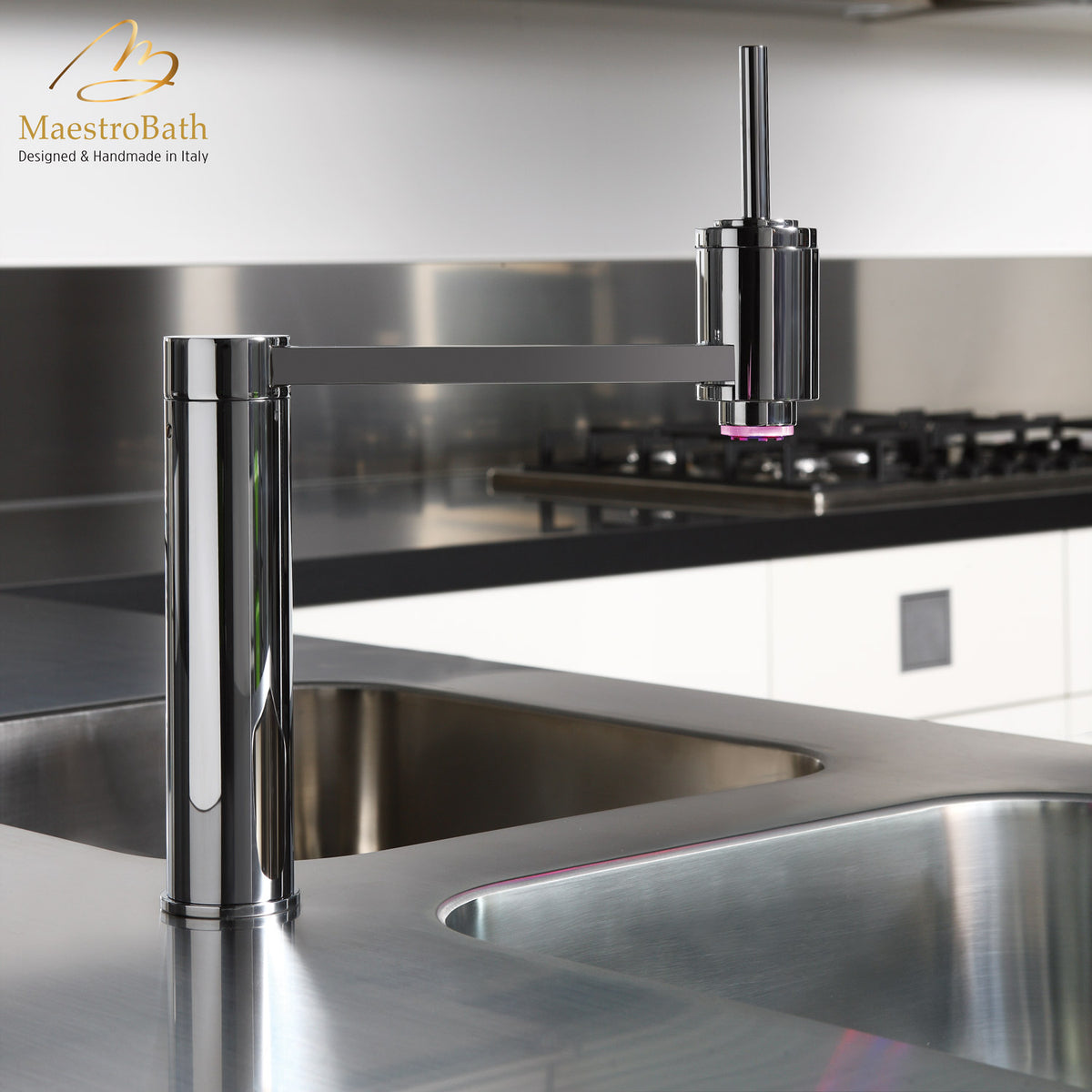
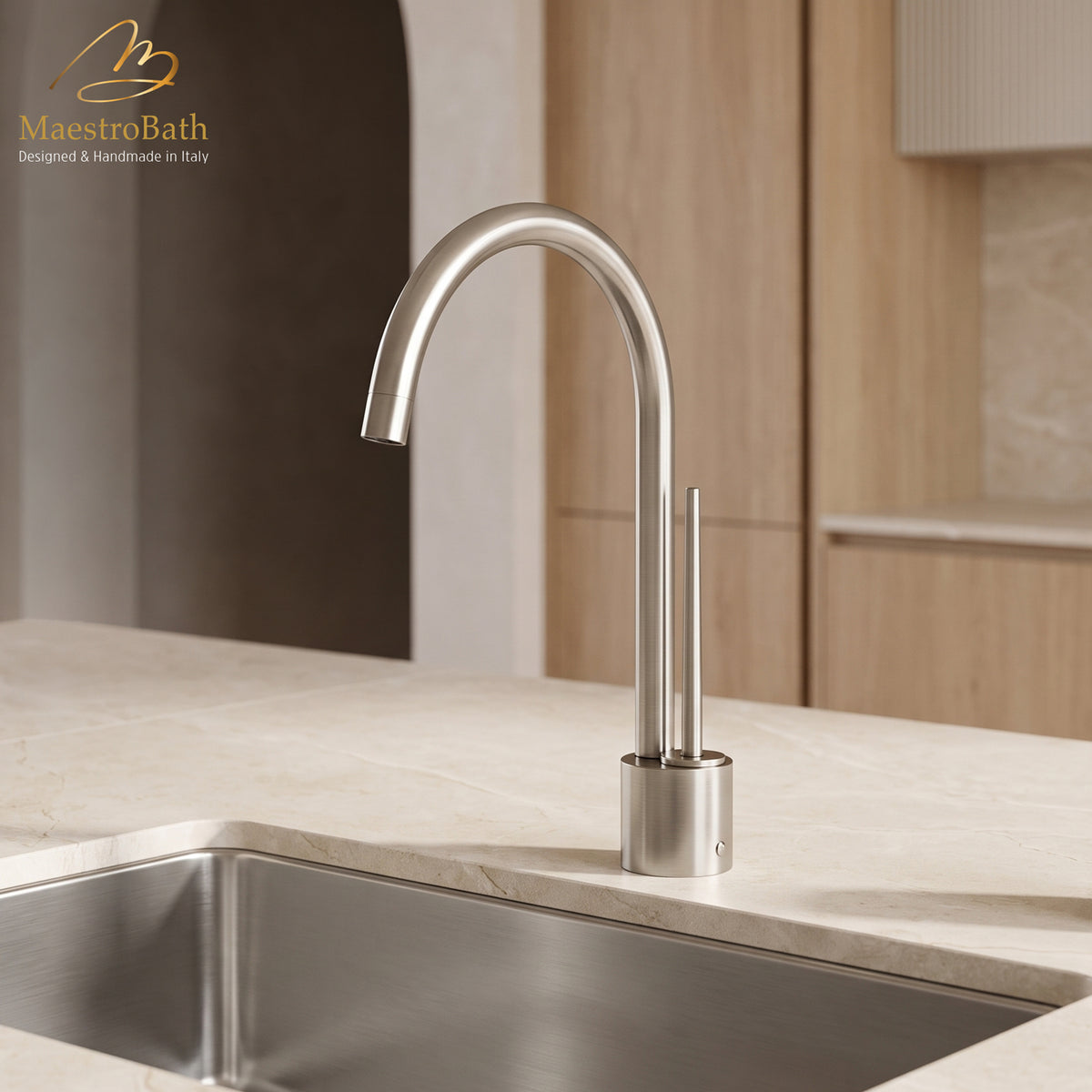
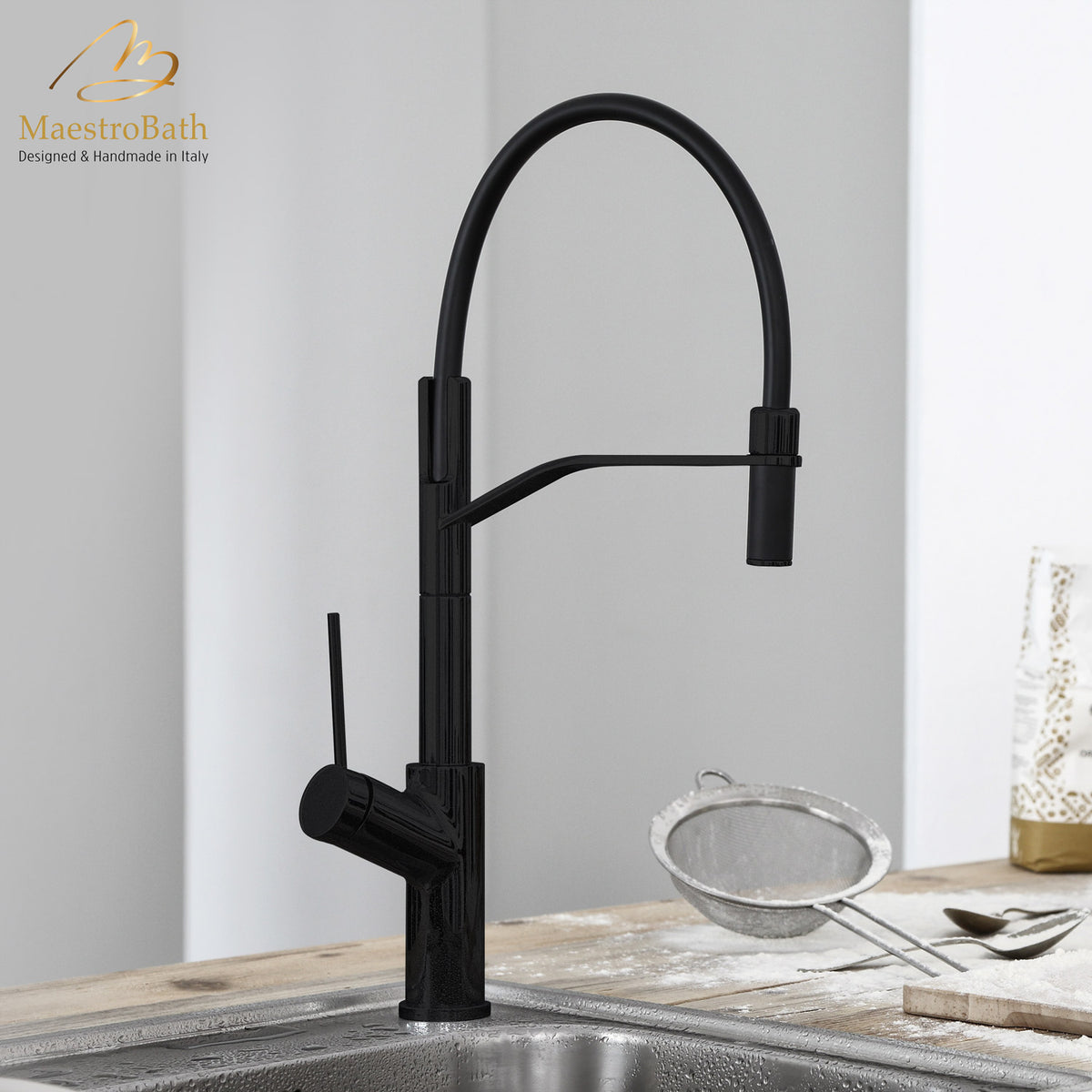
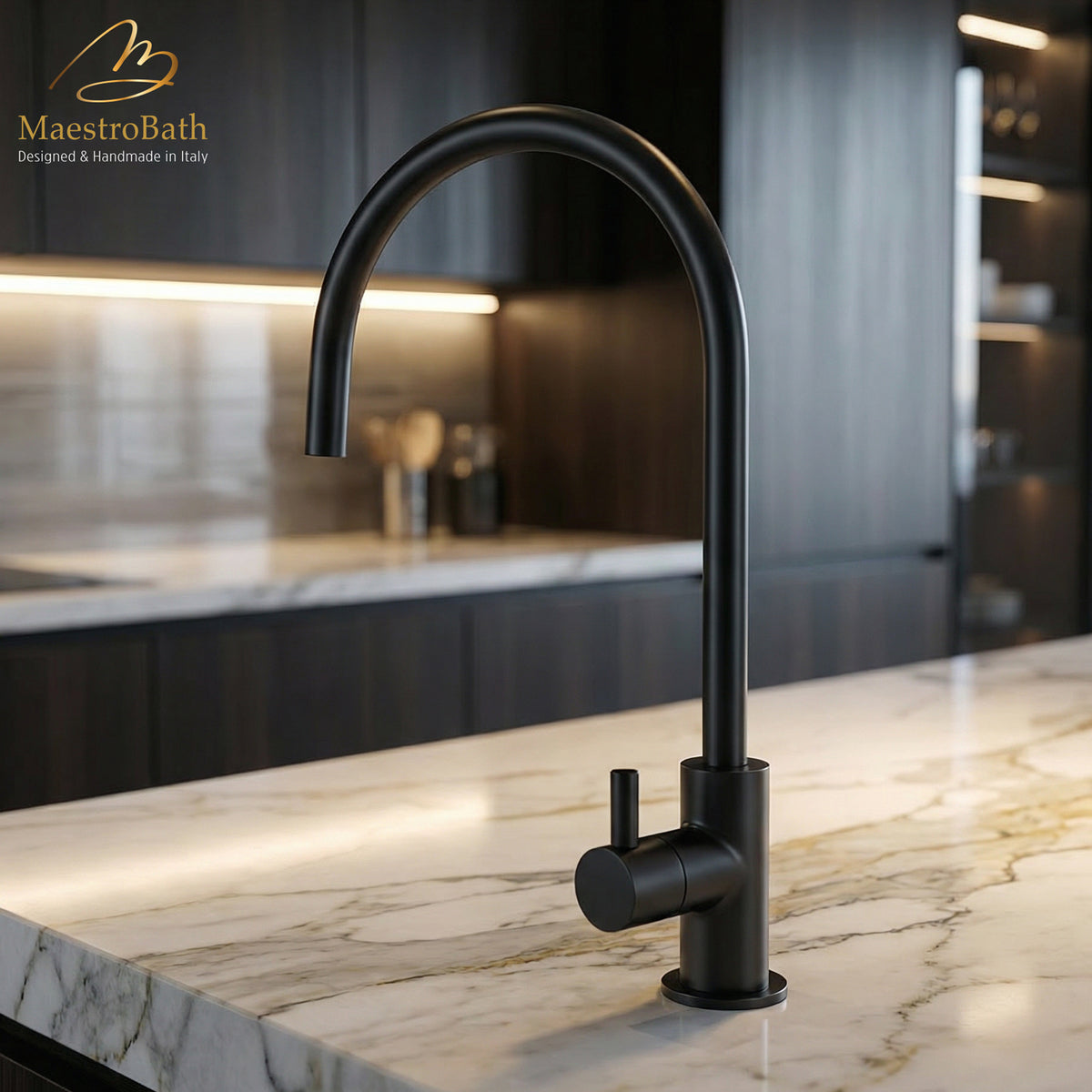
The kitchen faucet is the fitting you touch more than any other object in the house, often twenty or thirty times a day. It is the one piece of hardware in the room that is judged by hand as well as by eye, which is why the Italian workshops we buy from treat it as a machined object rather than a plumbing part. Three decisions determine whether you still admire it in a year: the finish, the spout, and the reach.
Shop modern kitchen faucets by finish
Finish is the choice clients revisit most, because it is the one that has to live alongside everything else in the room.
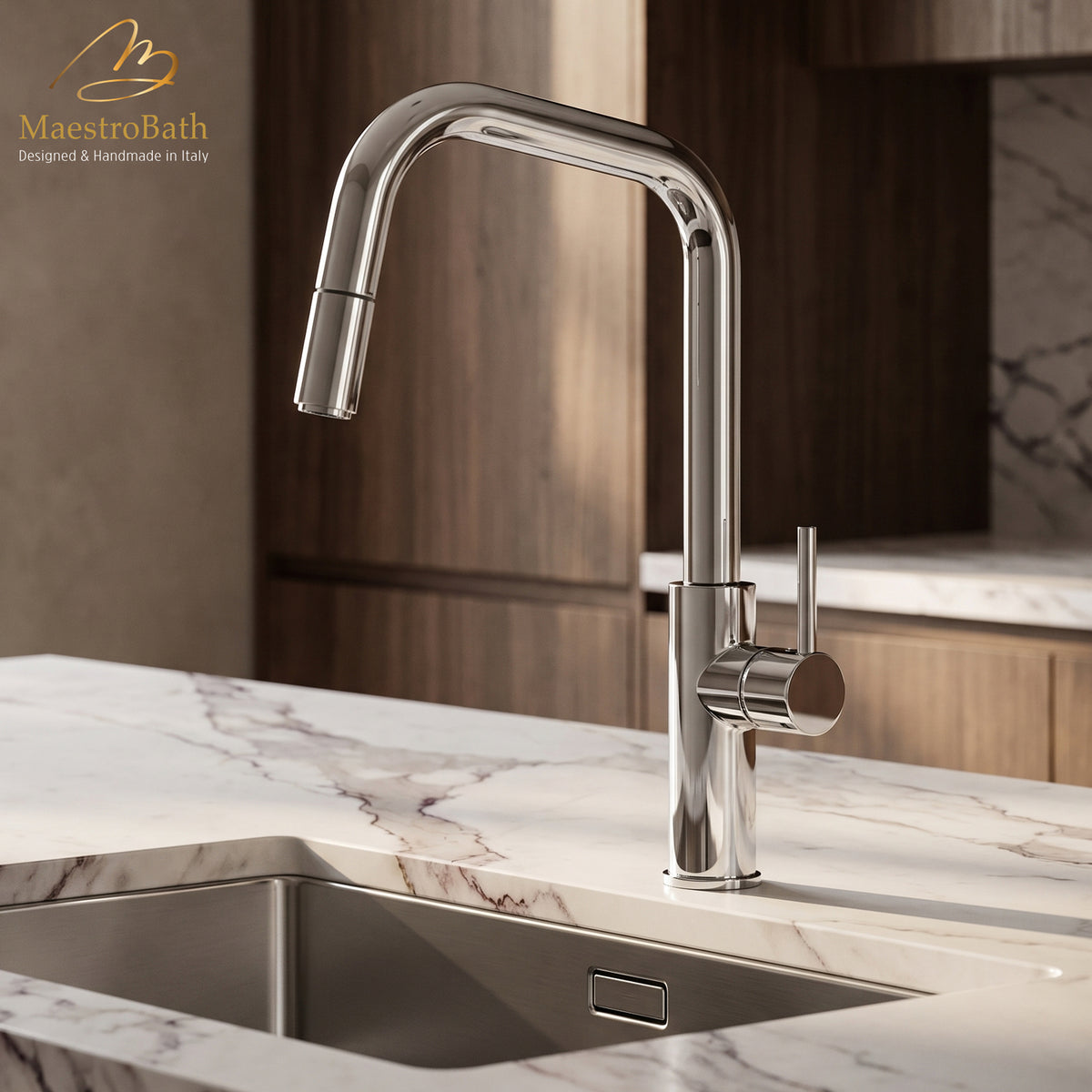
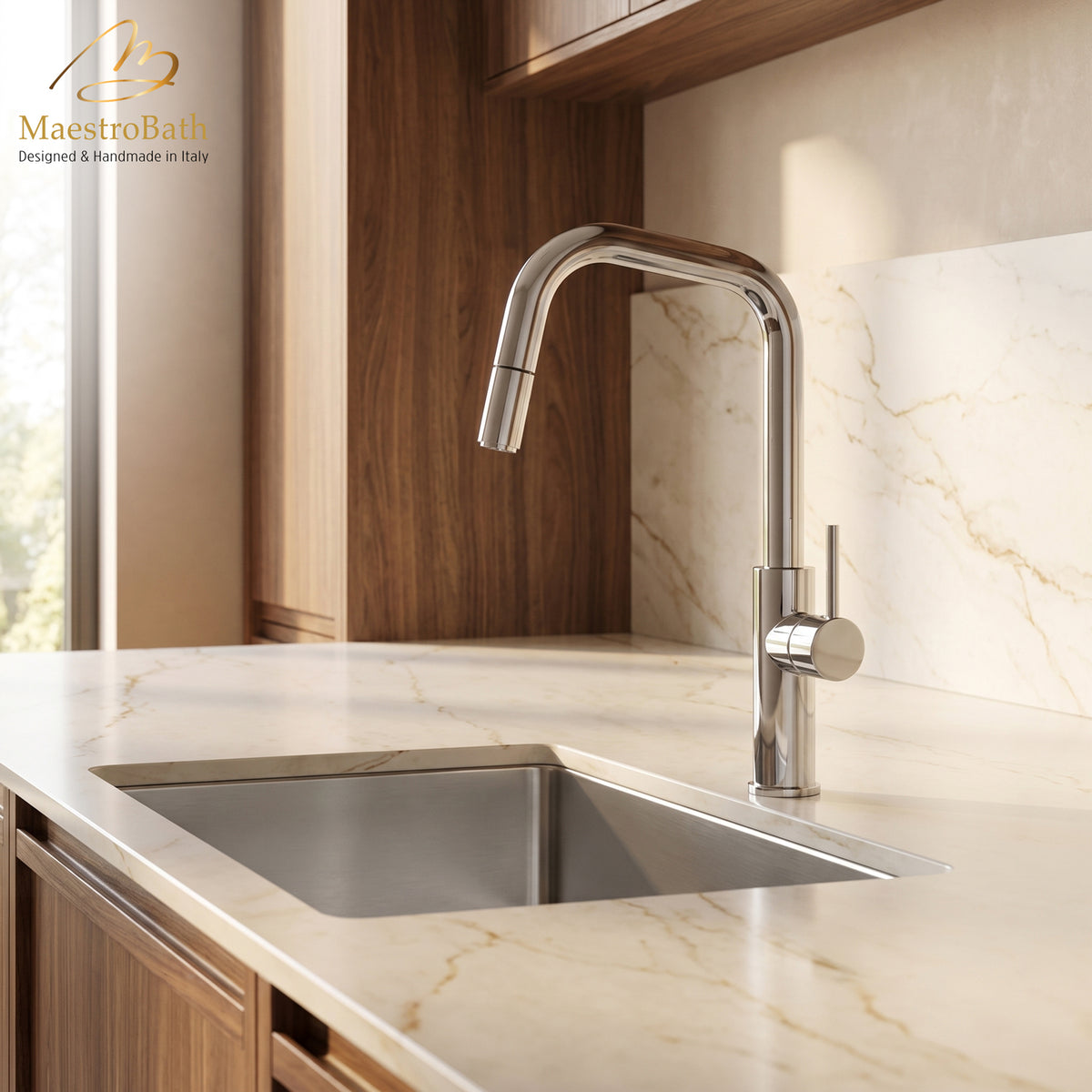
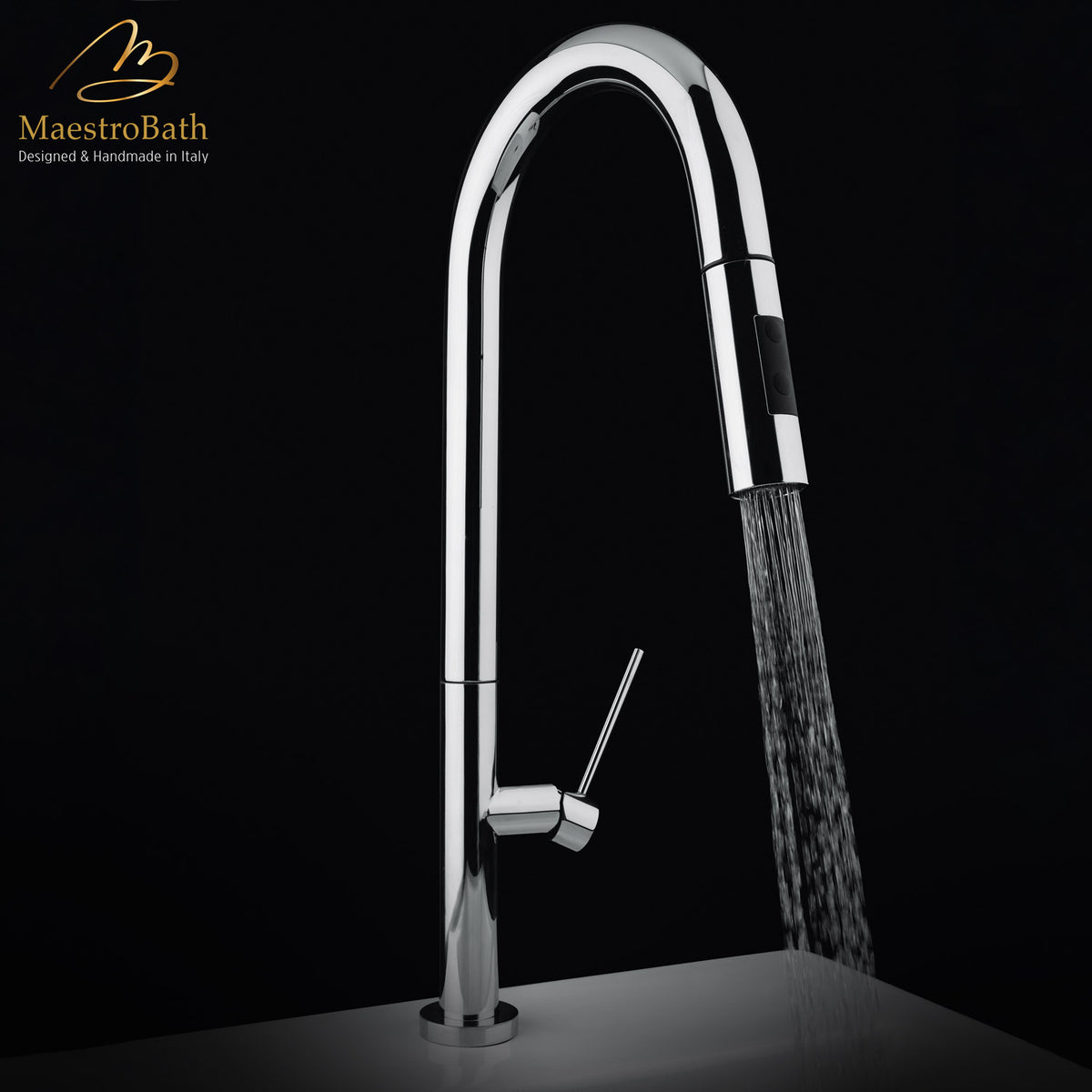
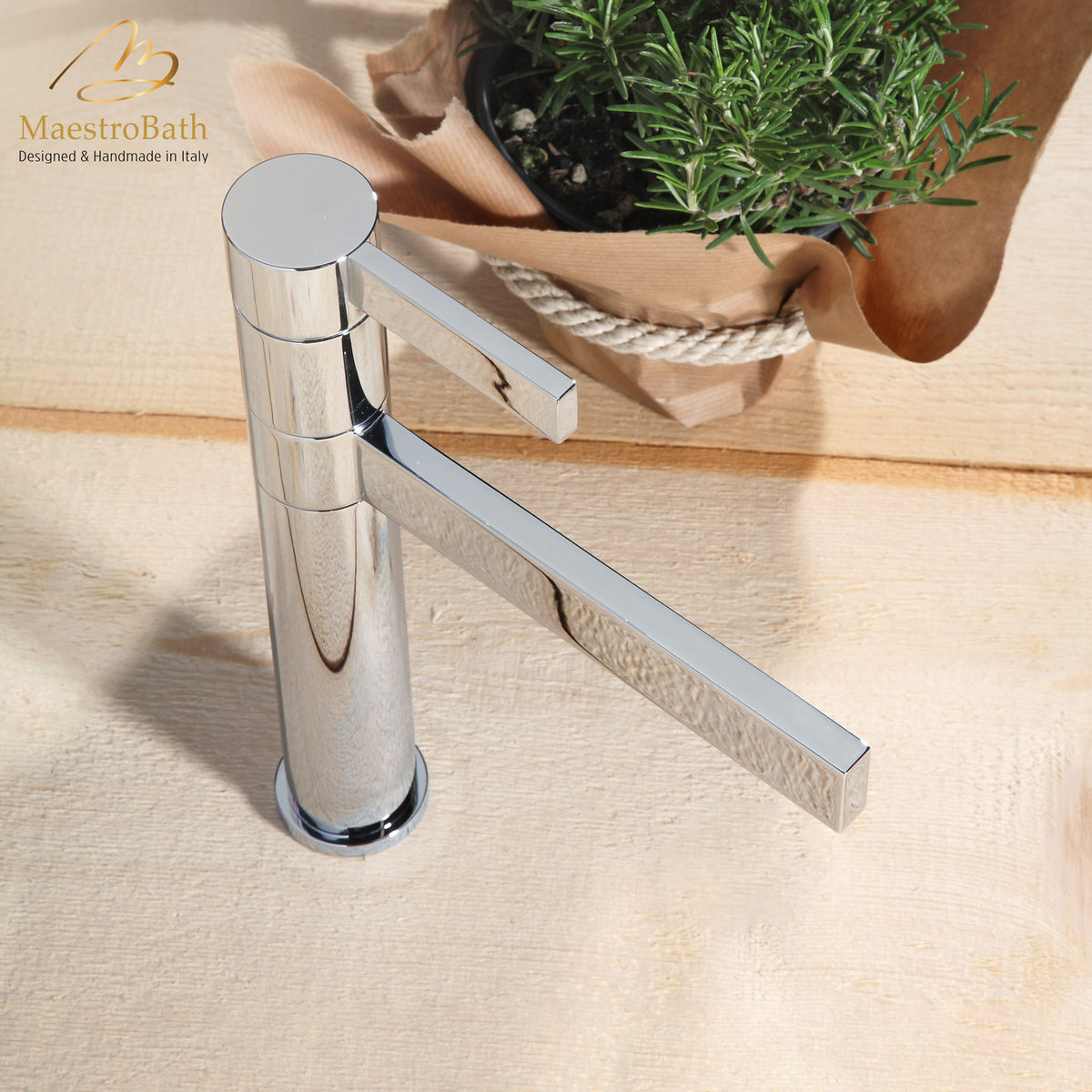
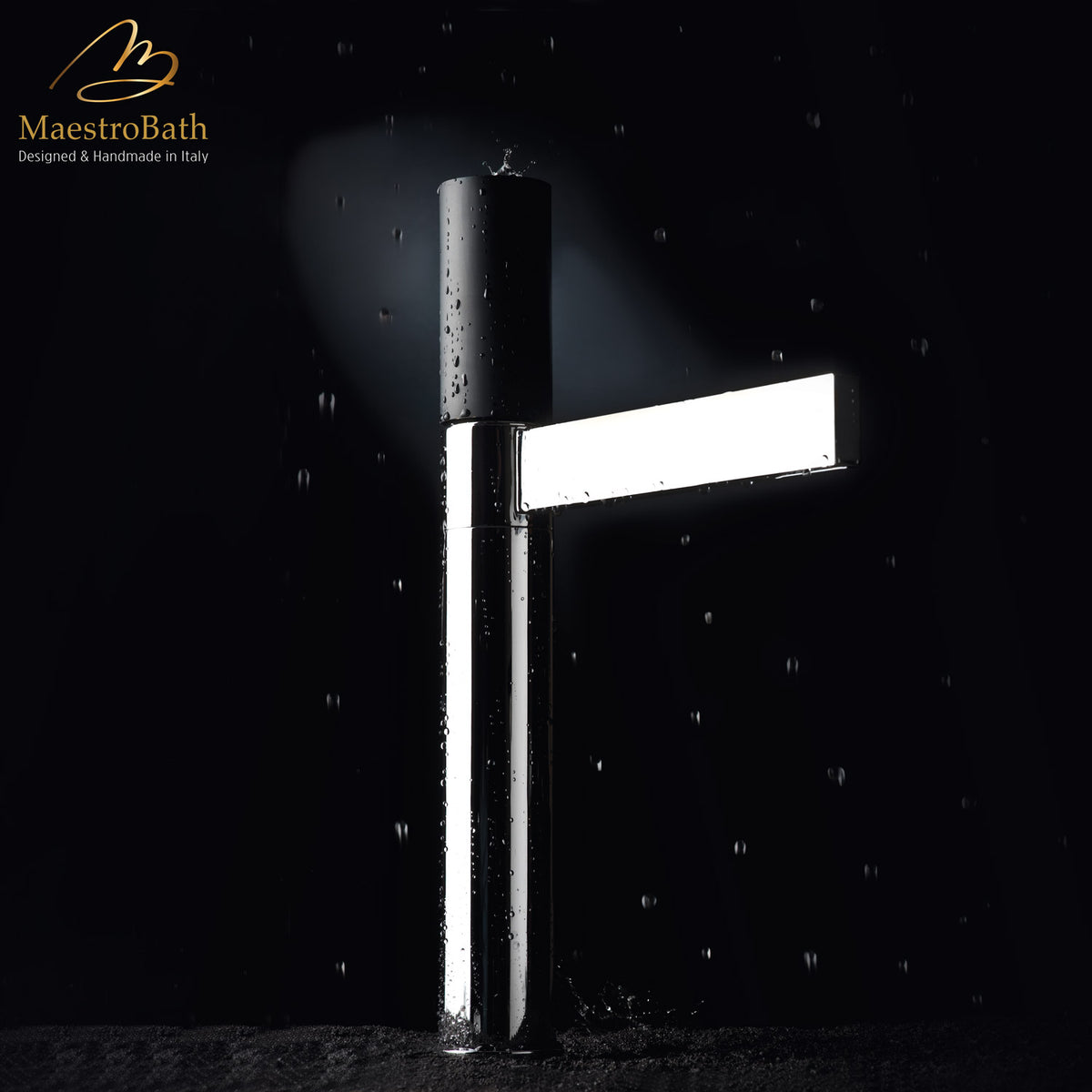
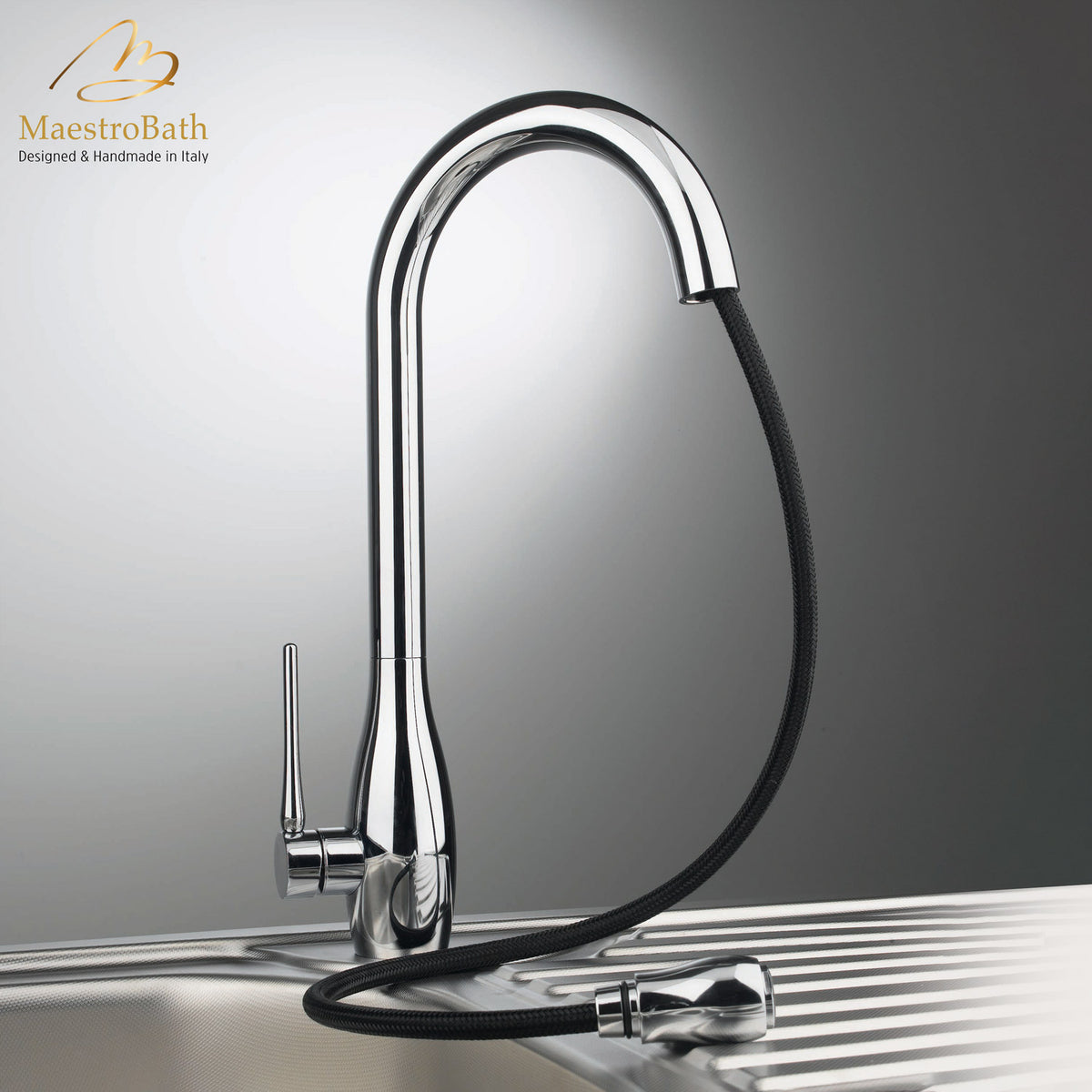
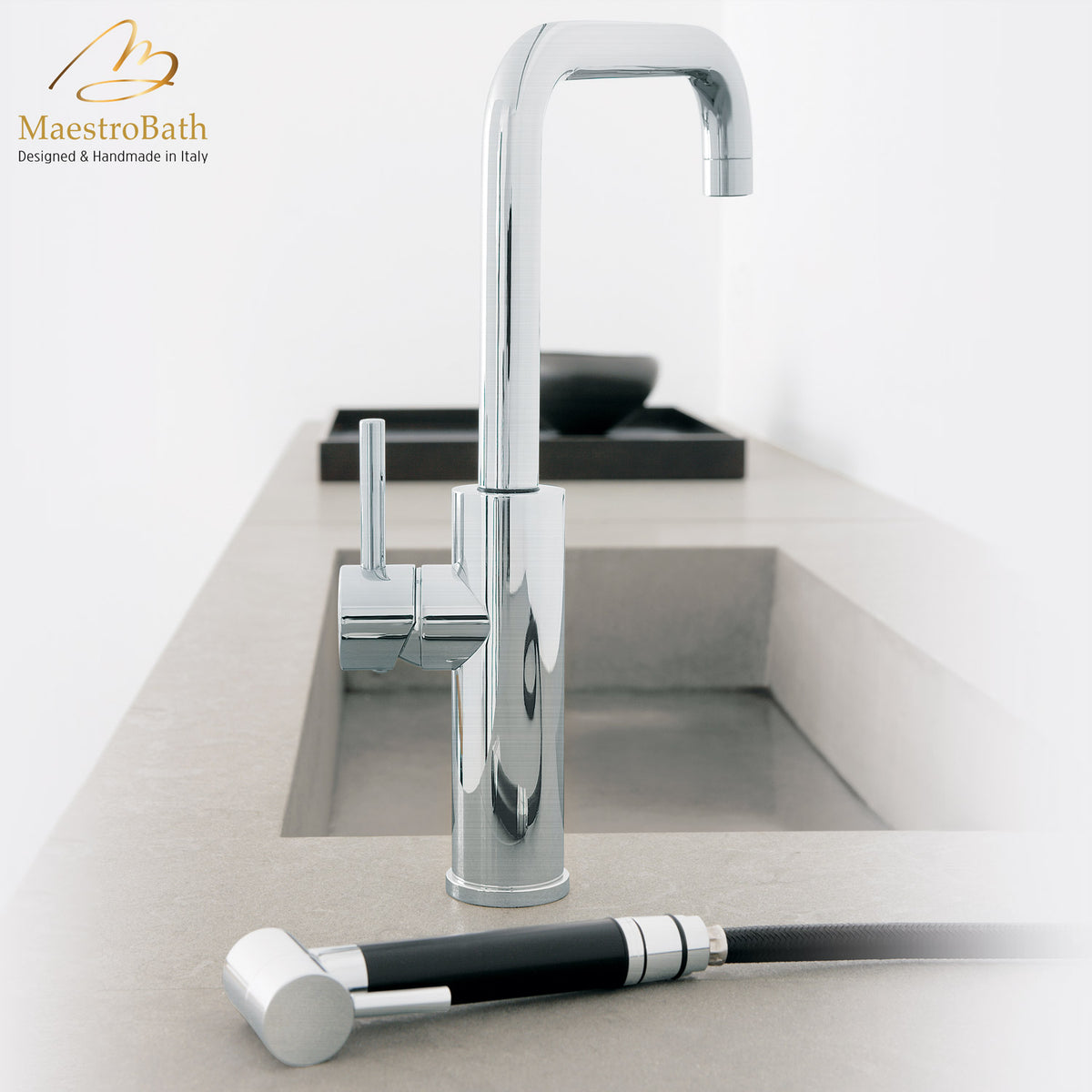
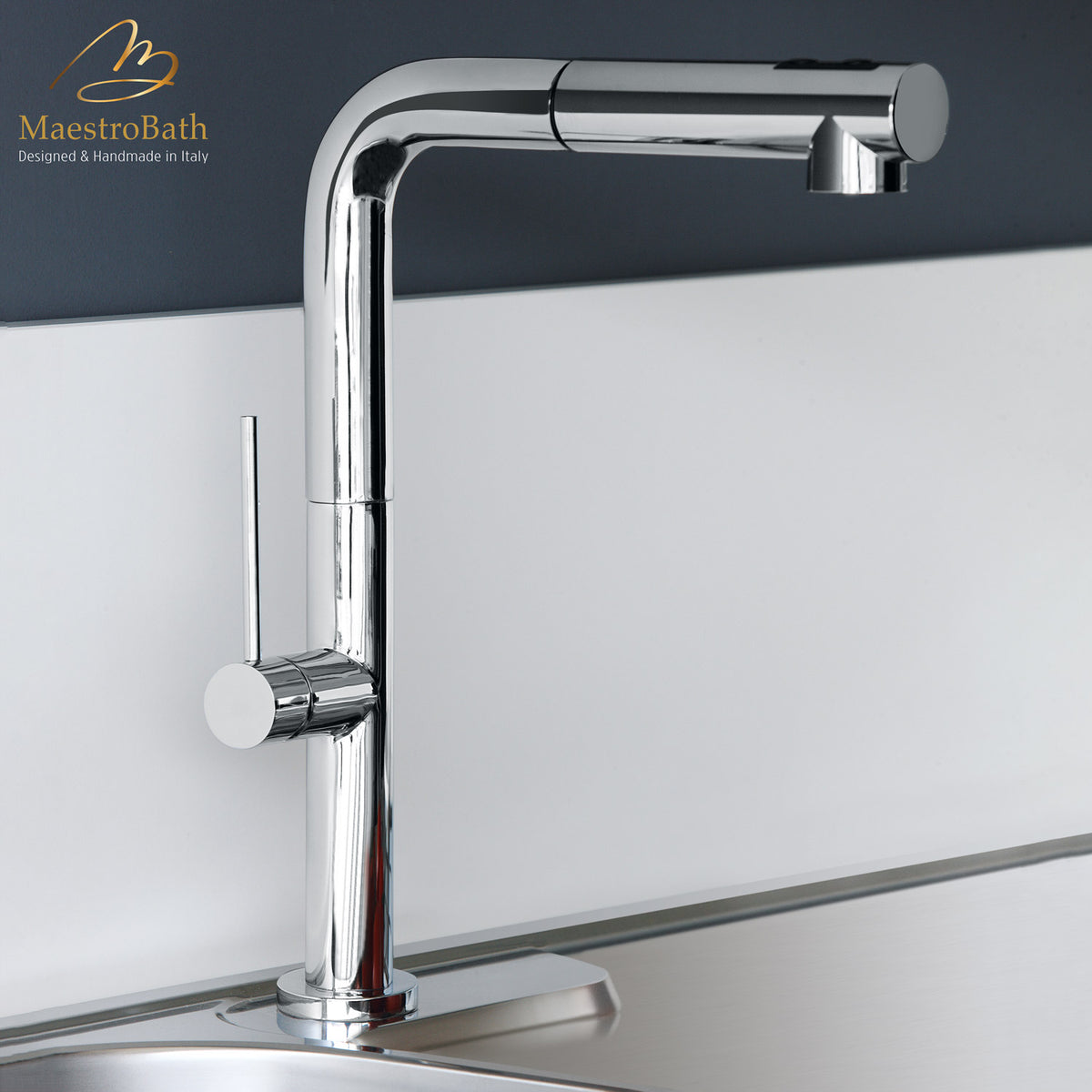
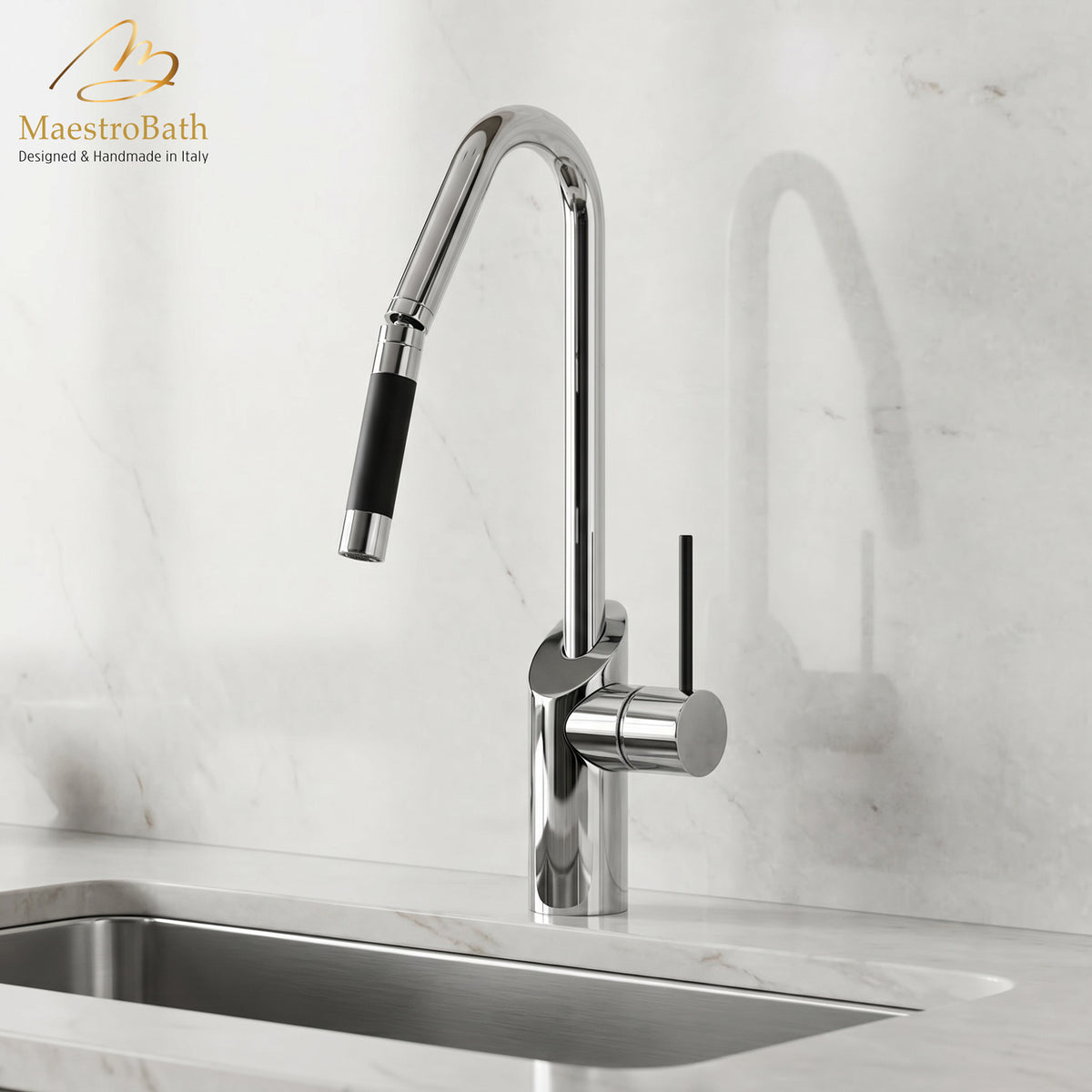
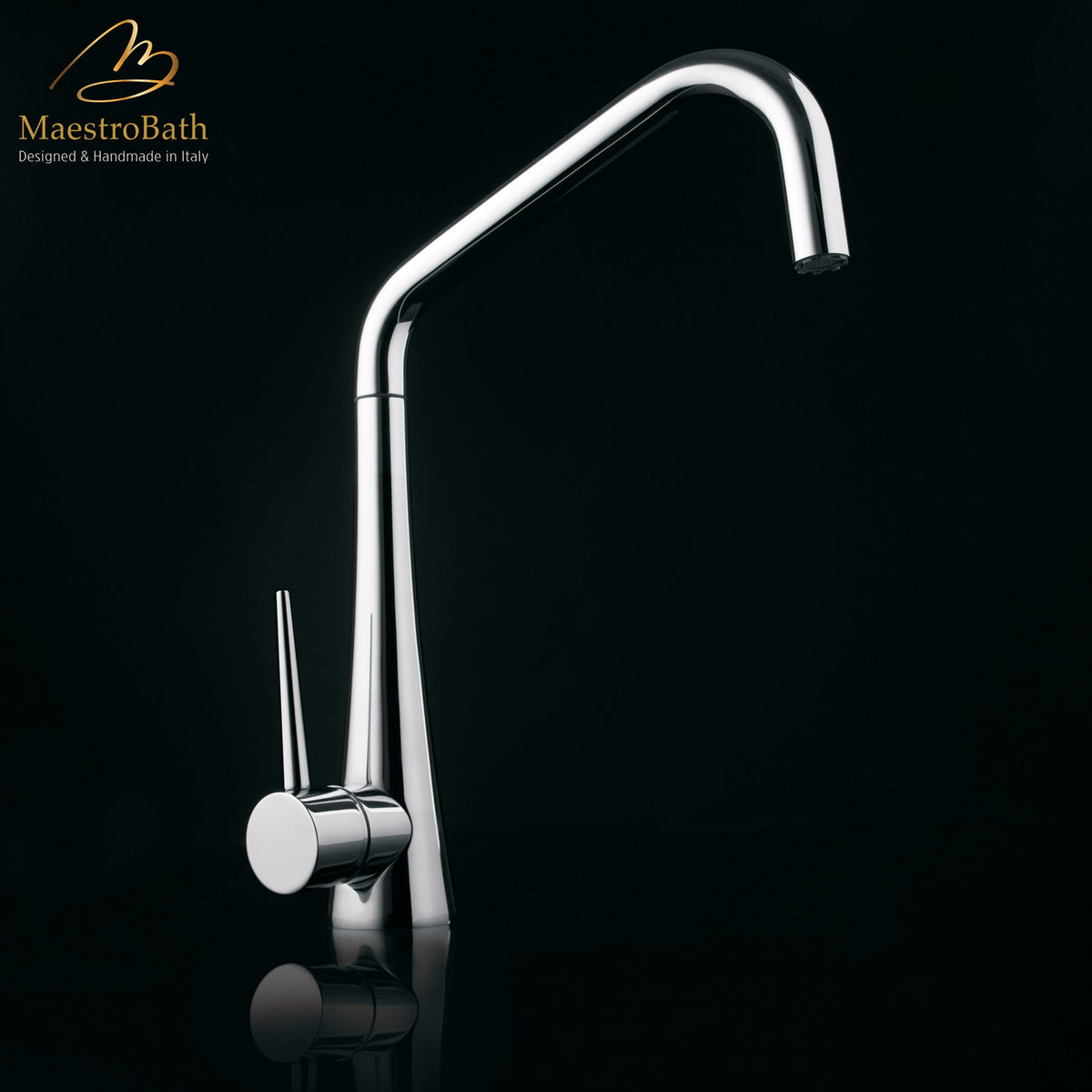
Chrome kitchen faucets are the most forgiving place to begin. Chrome is the hardest surface we plate, and it sits beside a stainless basin and stainless appliances without attempting to match them exactly, which is the thing that always looks wrong. The trade is reflectivity: a mirror surface records water spots, so in a hard water region it will need drying after use.
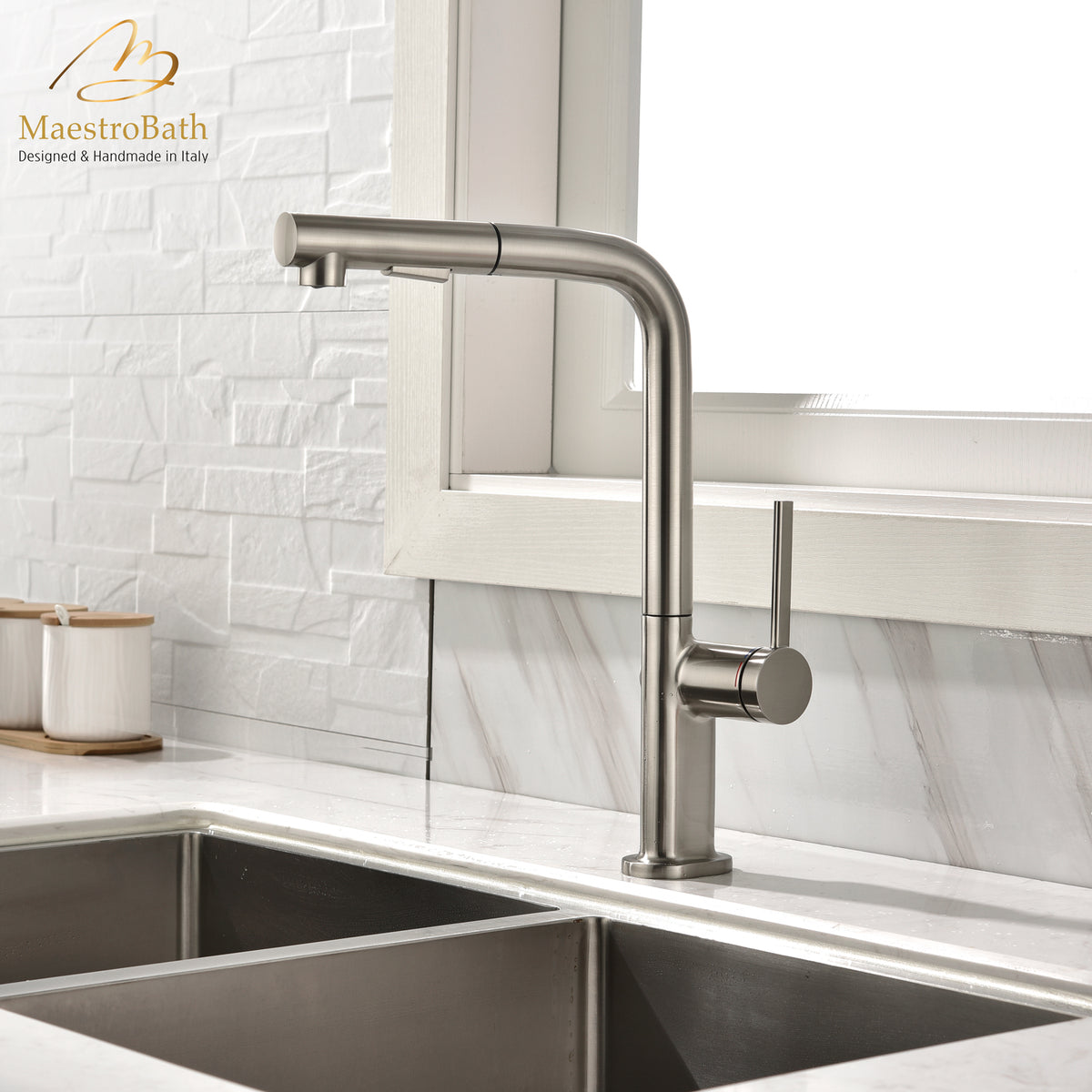
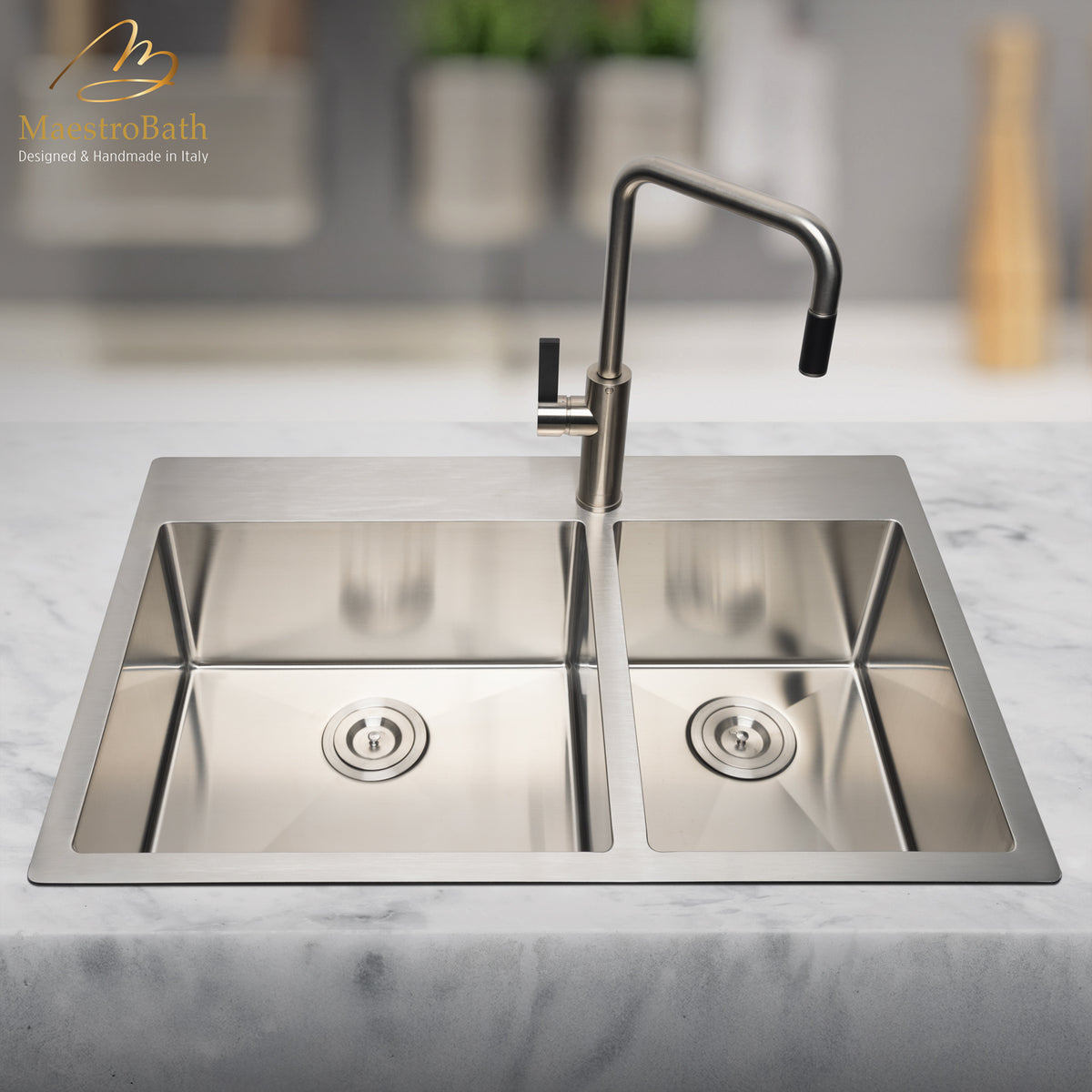
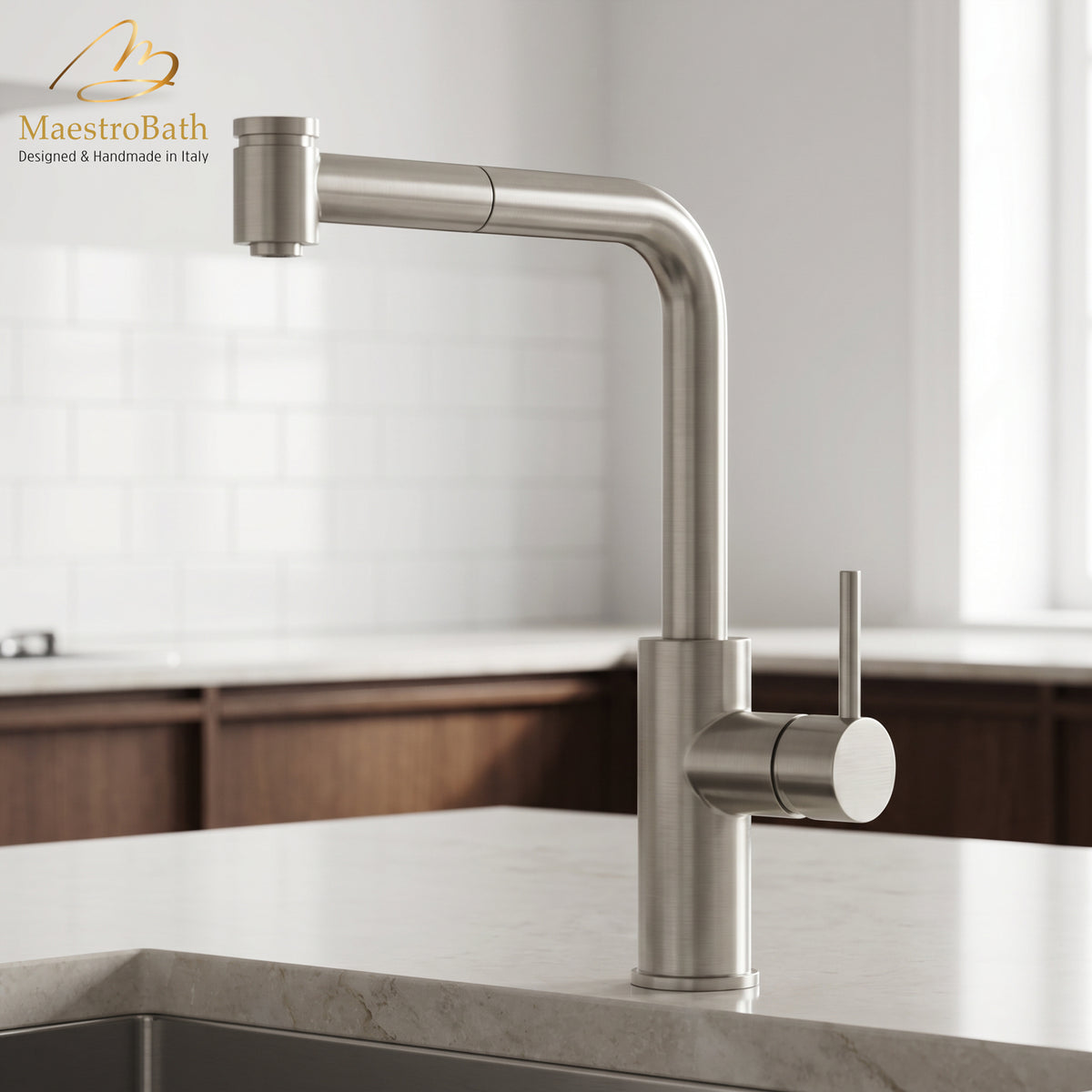
Brushed nickel kitchen faucets answer precisely that. The grain scatters light instead of returning it, so fingerprints and the pale film hard water leaves behind never register the way they do on chrome. Brushed nickel also carries more warmth, which matters in a kitchen built around timber and stone.
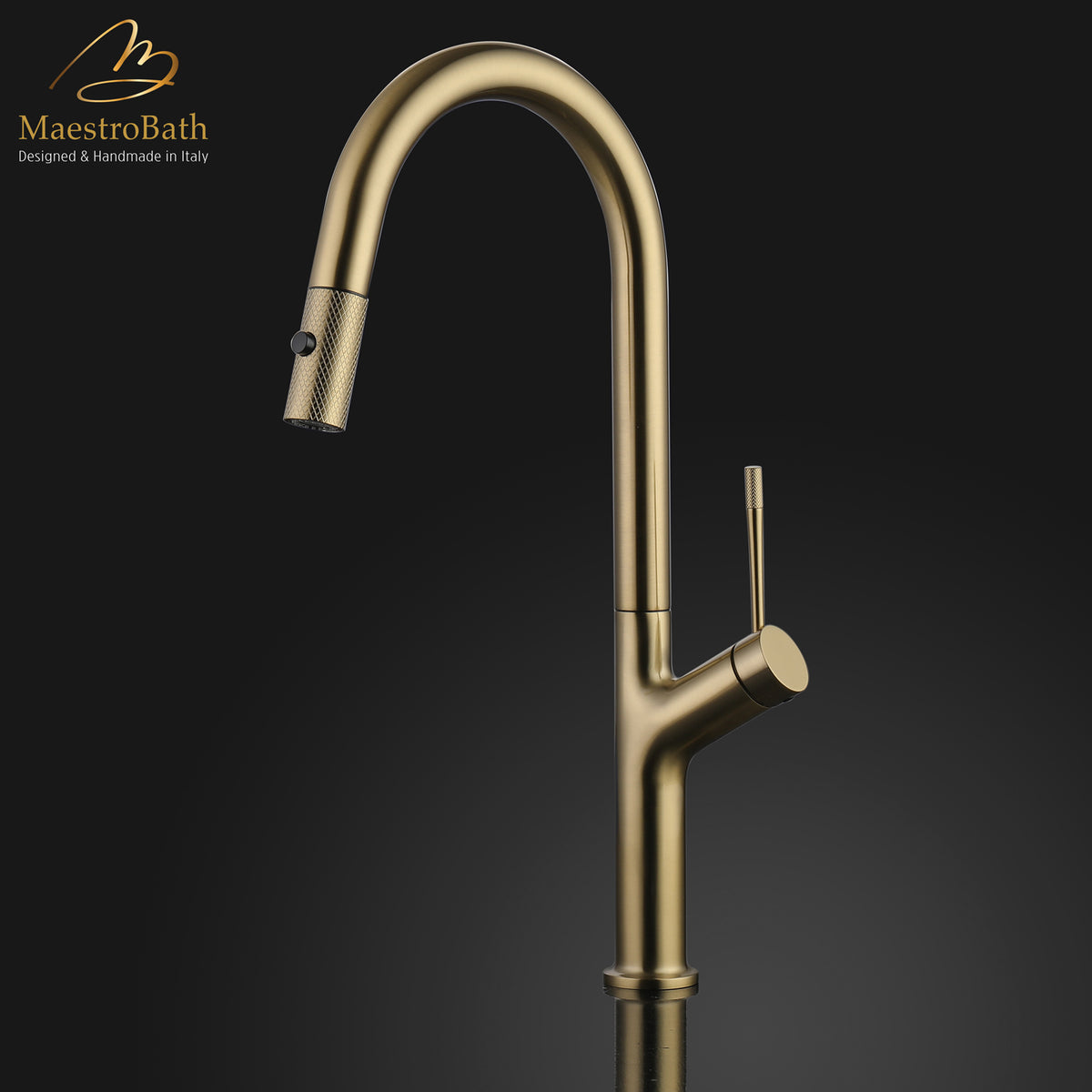
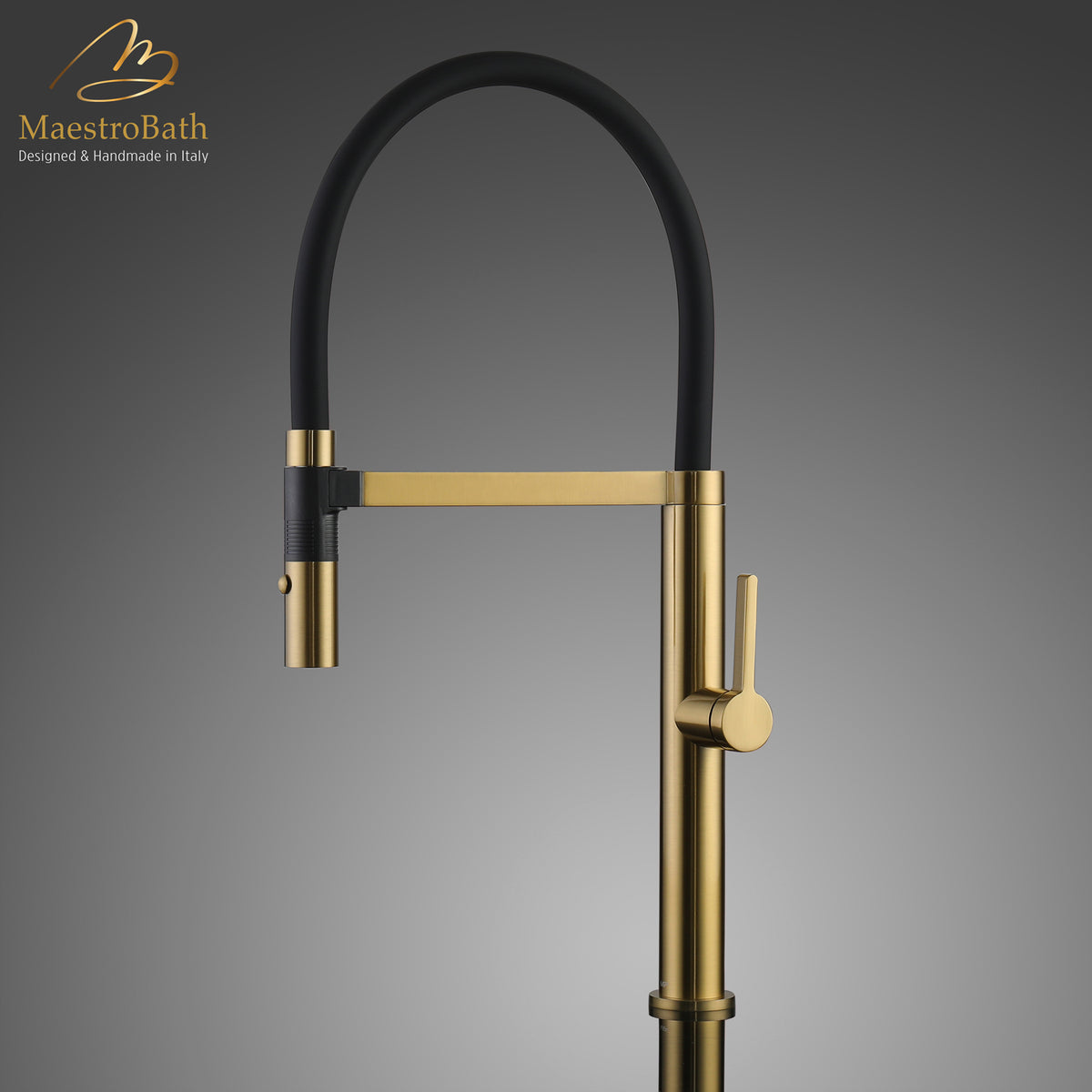
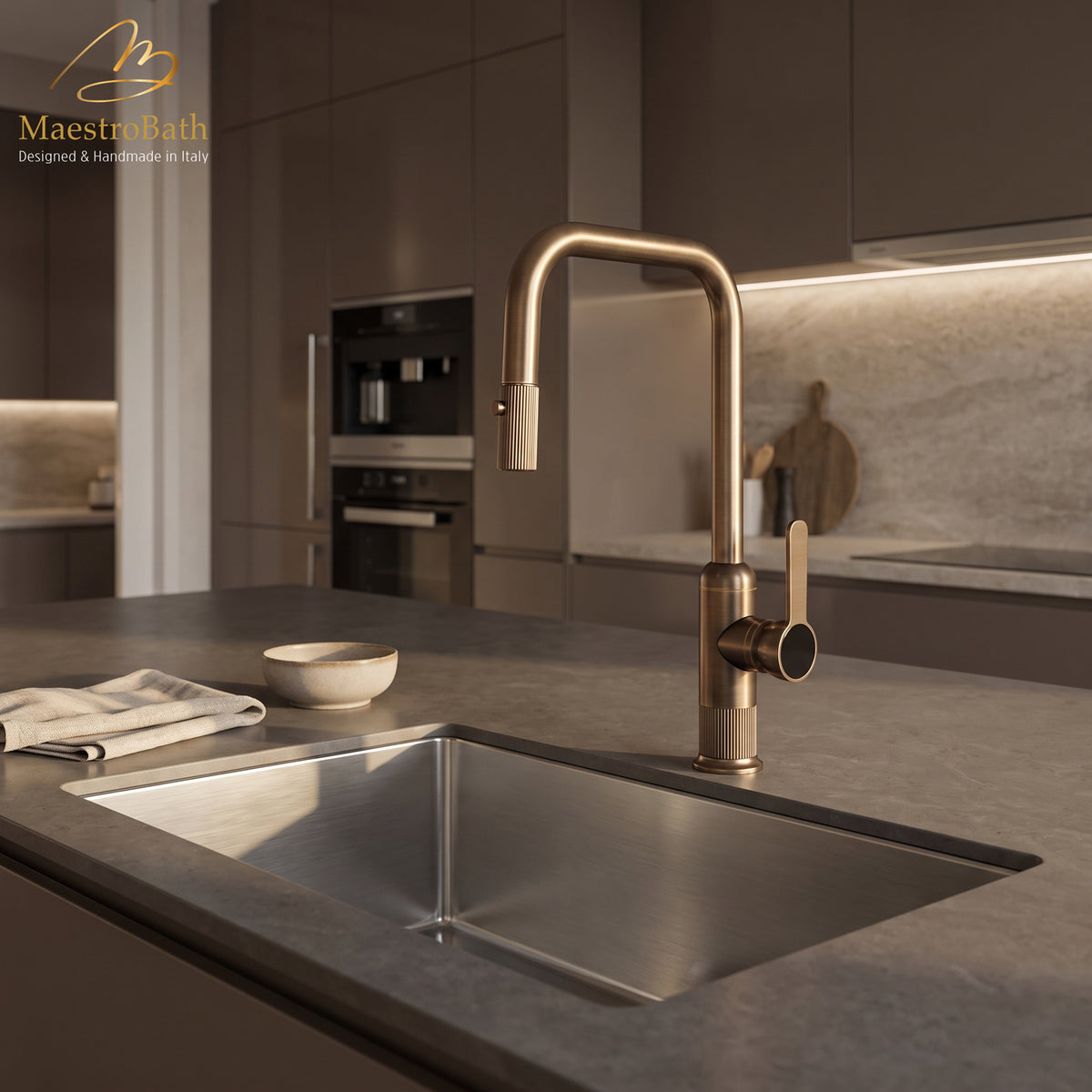
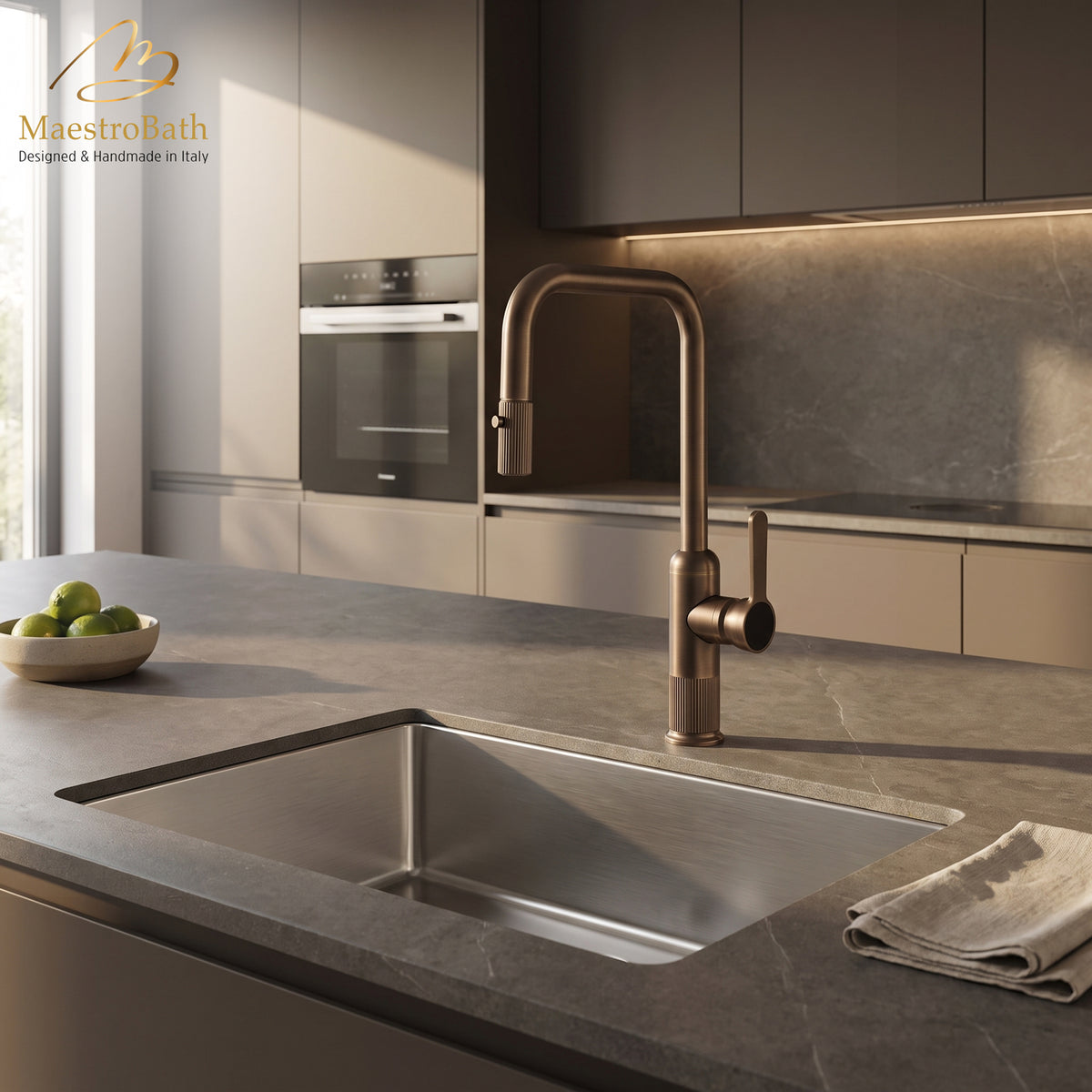
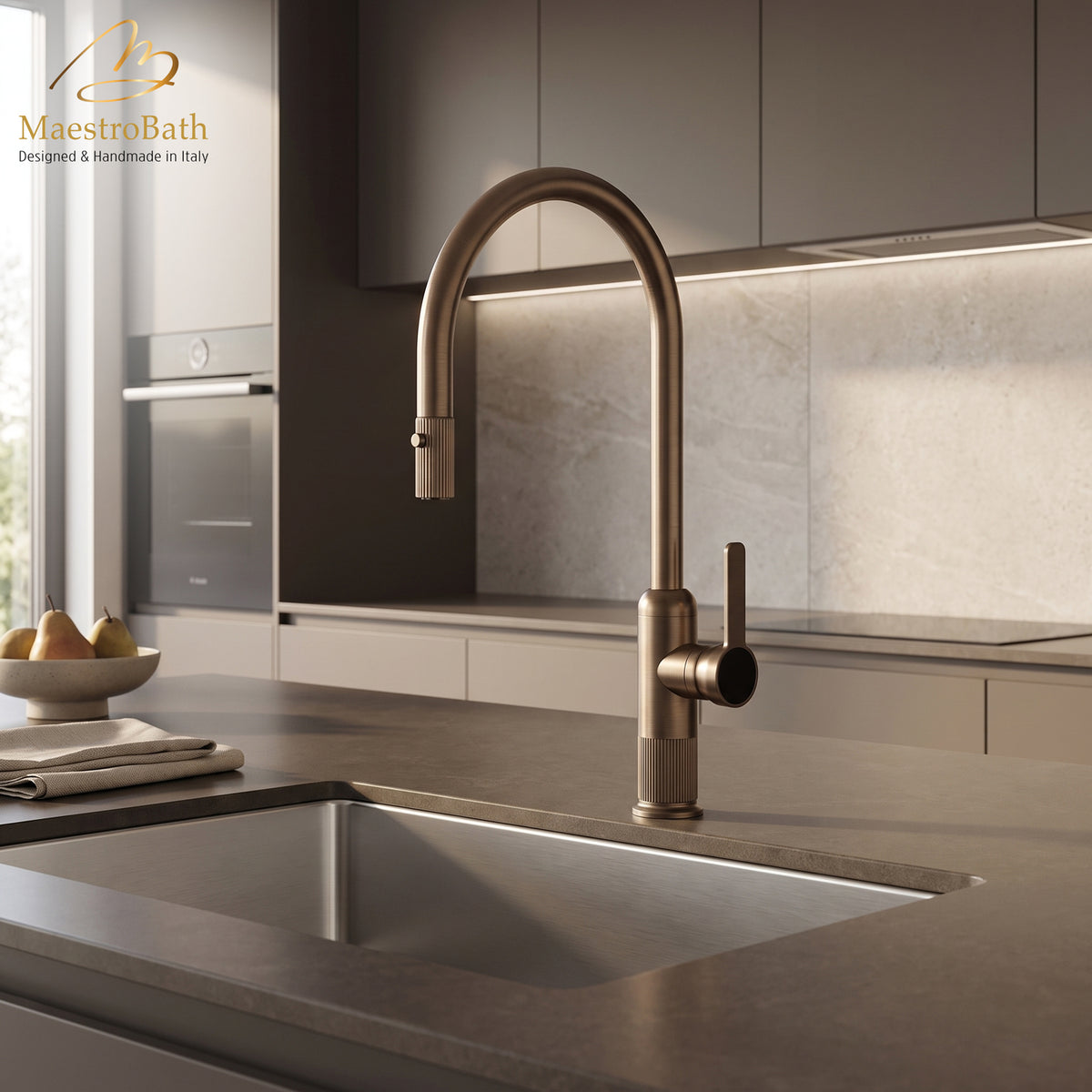
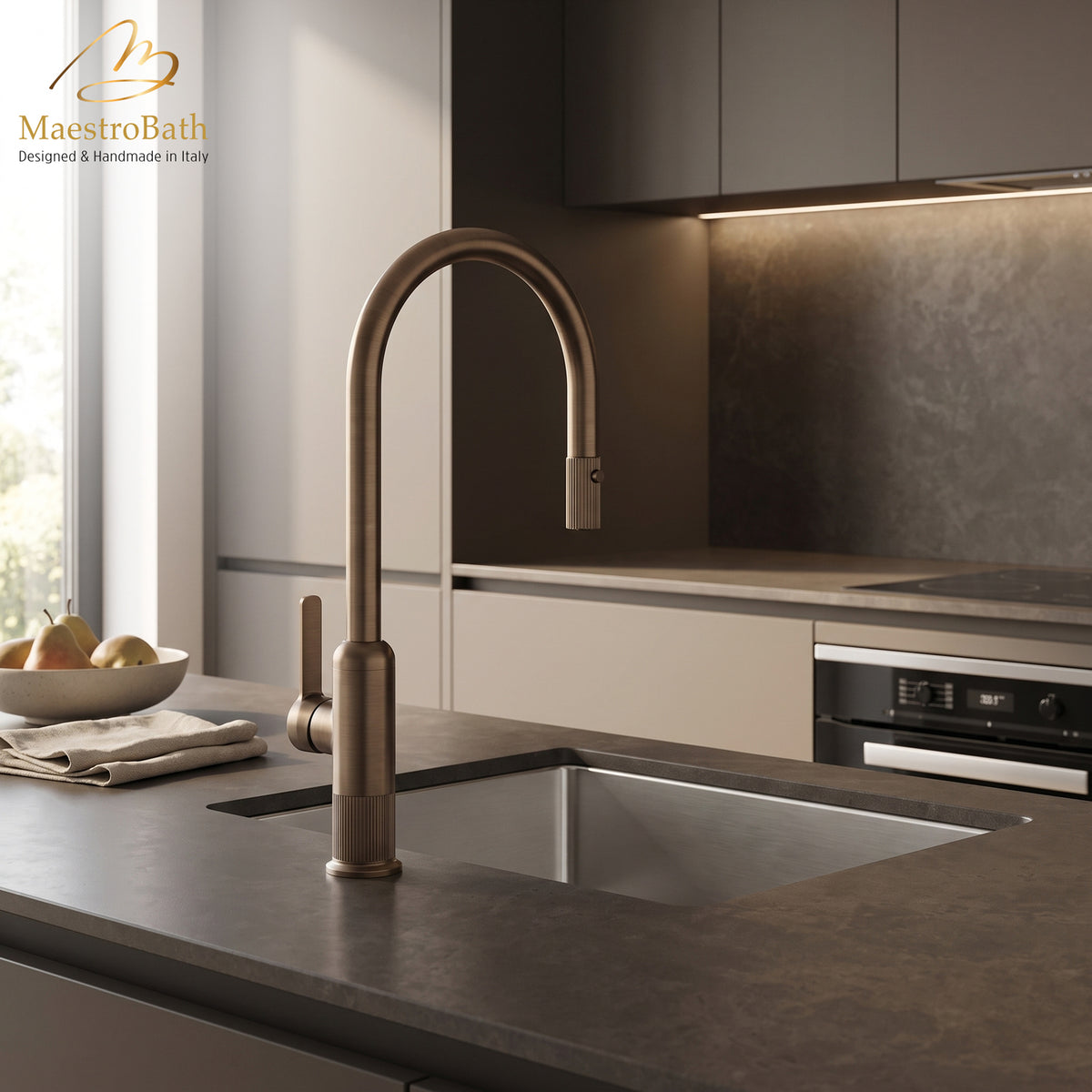
Gold kitchen faucets, brushed or polished, are the one warm metal that makes stainless steel appliances look intentional rather than inherited. Brushed gold is the more forgiving of the two: the grain softens the color so it reads as brass rather than as jewelry. Polished gold is brighter and throws more light, and belongs in a kitchen with real daylight and little else competing for attention.
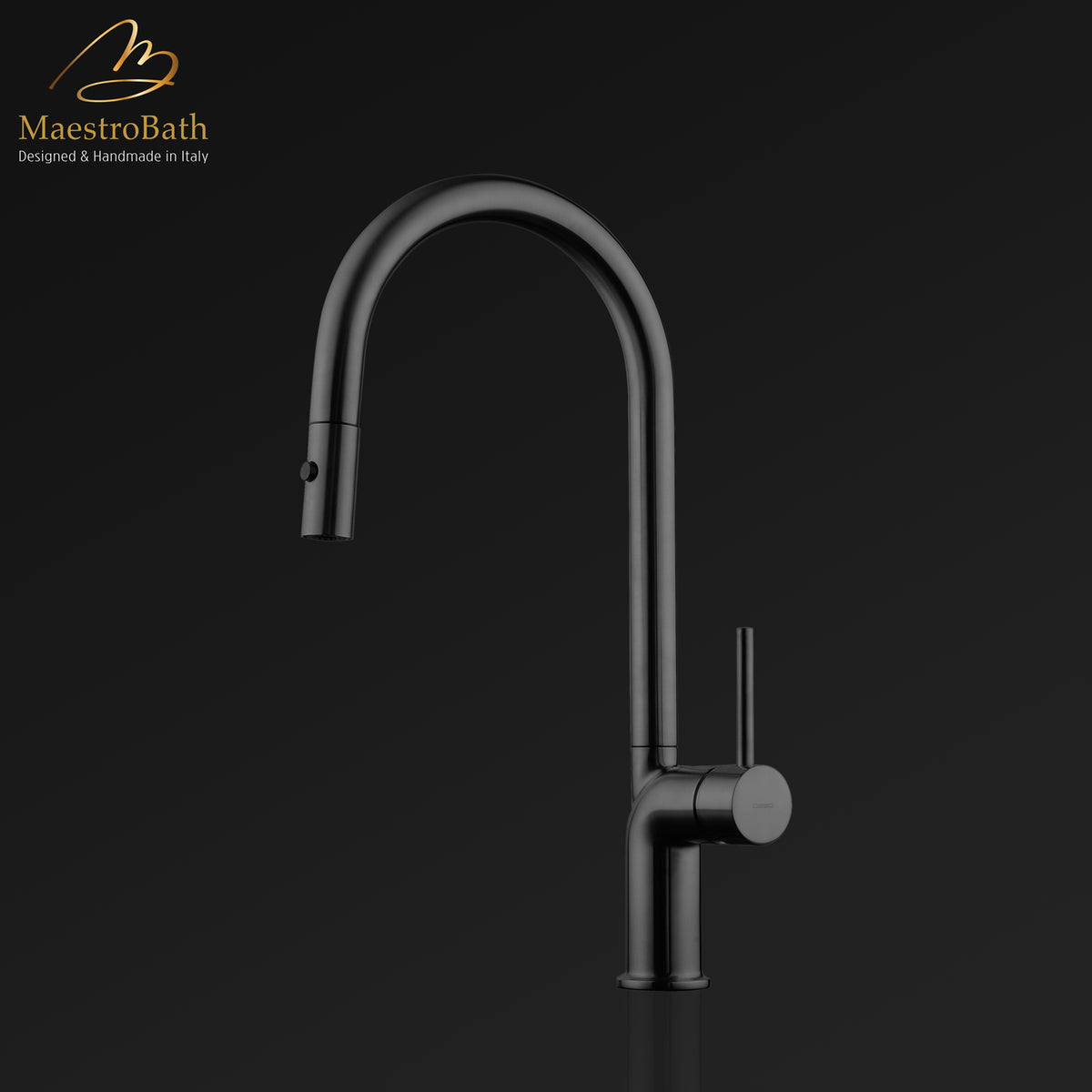
Matte black kitchen faucets are most convincing when they echo something already present: black window frames, a dark range, cabinet hardware in the same tone. Black conceals fingerprints better than any other finish and hard water worse than any other finish.
Pull out, pull down, and fixed head designs
A pull out kitchen faucet carries a head that detaches and returns on a counterweighted braided steel hose. For anyone who genuinely cooks it is the more useful of the two designs. You can rinse the walls of the basin, fill a stock pot standing on the counter, and direct the water where the work is rather than where the spout happens to point.
A fixed head is the choice when the faucet is a sculptural object first. Fewer moving parts, an uninterrupted silhouette, and at a sink used for washing a few things at a time it concedes very little.
Spout reach and spout height
Spout reach is the horizontal distance from the faucet body to the center of the stream, and it should land near the middle of the basin. Set short of the drain, it becomes a daily irritation. Set too far, it will strike the far edge every time.
Spout height governs whether a stock pot passes underneath, and whether the faucet clears a window sill or a cabinet above the sink. Both measurements are listed in the specifications on every product page. Measure your sink before ordering.
Single hole and bridge faucets
A bridge faucet uses separate hot and cold handles and requires two holes drilled through the counter or the sink. It suits a deliberately traditional kitchen and very little else. It asks something of you every time you adjust the temperature, and more components means more that can eventually fail.
A single hole kitchen faucet mixes temperature on one lever and needs a single opening. Smaller footprint, uninterrupted line, fewer points of failure. Almost every faucet in this collection is single hole.
Single mode and dual mode
On a single mode faucet the water leaves the spout one way. A dual mode faucet carries a control on the head that alternates between an aerated stream and a spray, and several switch to spray automatically when the head is drawn out. If you rinse produce or wash down the basin often, dual mode earns its place.
Beyond the main sink
Two fittings in this collection are not main sink faucets and are easy to miss inside a long grid. The wall mount pot filler installs over the range and fills a stock pot where it stands, which saves carrying a full pot across the kitchen. It needs a supply run to the wall behind the range, so it belongs in the plan rather than in the finishing. The bar faucet is a smaller single hole fitting for a prep sink, an island second basin or a butler pantry, where a full height kitchen spout would be out of scale.
Common Questions
What is the best finish for a kitchen faucet?
Brushed nickel is the most forgiving in daily use, because its grain conceals water spots and fingerprints. Polished chrome is the most durable surface and the easiest to match to stainless steel already in the room. Matte black and gold are design decisions, and they succeed when they repeat another element in the kitchen rather than standing alone.
What is the difference between a pull out and a pull down kitchen faucet?
Both have a detachable spray head on a hose. A pull down head sits in a tall arched spout and draws straight down into the basin. A pull out head sits in a lower spout and draws toward you. Pull down suits a deep single bowl, pull out suits a shallower or divided sink and gives more reach beyond the basin. Our pull out kitchen faucets cover both patterns.
What spout reach do I need for my sink?
Measure from the back edge of the sink to the drain, then choose a spout reach that places the stream near the center of the basin. A wide single bowl or a farmhouse sink generally requires more reach than a standard double bowl.
Are MaestroBath kitchen faucets solid brass?
Yes. They are made in Italy from solid lead free brass rather than zinc. That distinction matters at a kitchen sink specifically, because the constant swing between cold and near boiling water is what eventually splits a cheaper body at the base.
How do I clean a kitchen faucet without damaging the finish?
Warm water, a soft cloth and a mild dish soap. Keep abrasive pads, scouring cream and anything chlorine based away from every finish, and from gold and matte black in particular, since those are the two that dull first.
Where are MaestroBath kitchen faucets made?
In Italy, by workshops we hold exclusive agreements with. Each faucet is cast and finished there in solid lead free brass, then tested for water safety as well as for function and endurance before it ships.
About MaestroBath Kitchen Faucets
MaestroBath is designed and handmade in Italy. We work directly with the workshops rather than through distributors, which is how a range this small stays this particular, and why a faucet here is finished to a standard that is difficult to find at any price in a domestic catalog.
Our showroom is in Newport Beach, California. Designers, builders and showrooms specifying more than one kitchen can open a trade account. For anything else, call 800-320-1120 or email info@maestrobath.com, and someone who knows the range will answer.